

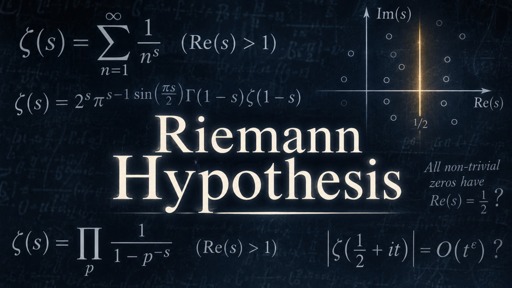
I haven’t seen people talk about this at all, so thought I’d share this article about it. For those depressed that no one will actually understand the RH Proof: we have another, entirely human proof which means there are humans who understand it. It might have been overshadowed, but assuming it ends up working out (I have heard there have been some problems found, hopefully they are surmountable) then I think it will be the far more impactful result.
A question I have that I don’t think I’ve seen answered anywhere. We know that the Lean project does compile and validate, across several Lean kernels. But do we know if that Lean project actually is a proof for the Riemann Hypothesis? Or could it just be validating something (even marginally) unrelated.
Let’s say I created a Lean project that verified if 1 == 1, but the actual lean code was so incomprehensibly large that no-one could understand what it was verifying, just that it did verify eventually, and said that was my Riemann Hypothesis proof. Would anyone have anything other than my word on that?
Yes that’s one of the criteria that were verified by humans. In the case of the Riemann hypothesis it’s not that difficult because it’s not that complex (only proving it is difficult, spelling it out isn’t), and there was an existing human curated formalization of it too.
You can read more about it here: https://leanprover-community.github.io/blog/posts/riemann-hypothesis/
Yes, the proof is literally in the pudding.
The whole point of Lean is the strict type-checking. In effect, the proof says “this is the Riemann Hypothesis, and this is the proof” and you can be 100% certain that the proof is valid.
This is the part we have to check ourselves
This is long done.
The proof uses the built-in Mathlib definition of the hypothesis.
Right, but the proof doesn’t, and can’t, say that the definition is the riemann hypothesis as we understand it. The proof is internally consistent as verified by Lean, but the connection between the Lean formalization and the natural language definition must be human-verified since it lies outside the scope of Lean. (I’m being pedantic here).
Sure, but that pedantry does not apply here.
Yes, it does. The lean proof cannot establish that its own conclusion is the NL statement being proven. This fact is the literal opposite of the claim you made in your original comment.
I think you know this, and we don’t disagree about what Lean does. My point is that you described it incorrectly.
100 million tons of pudding; yep the proof is in there somewhere, get digging.
BTW, the proof looks exactly like pudding, good luck.
Yeah, and?
It’s still a valid proof.
How is it useful? (Genuine question, not a math guy) is it like proof that it could be proven?
It can be useful to know that something is true insofar as other proofs can depend on the other. I do not know what exactly this one is good for.